Place du Nouveau Marché aux Grains 10
Nieuwe Graanmarkt 10
1000 Brussels
Nieuwe Graanmarkt 10
1000 Brussels
contact@mad.brussels
+32 2 880 85 62
+32 2 880 85 62
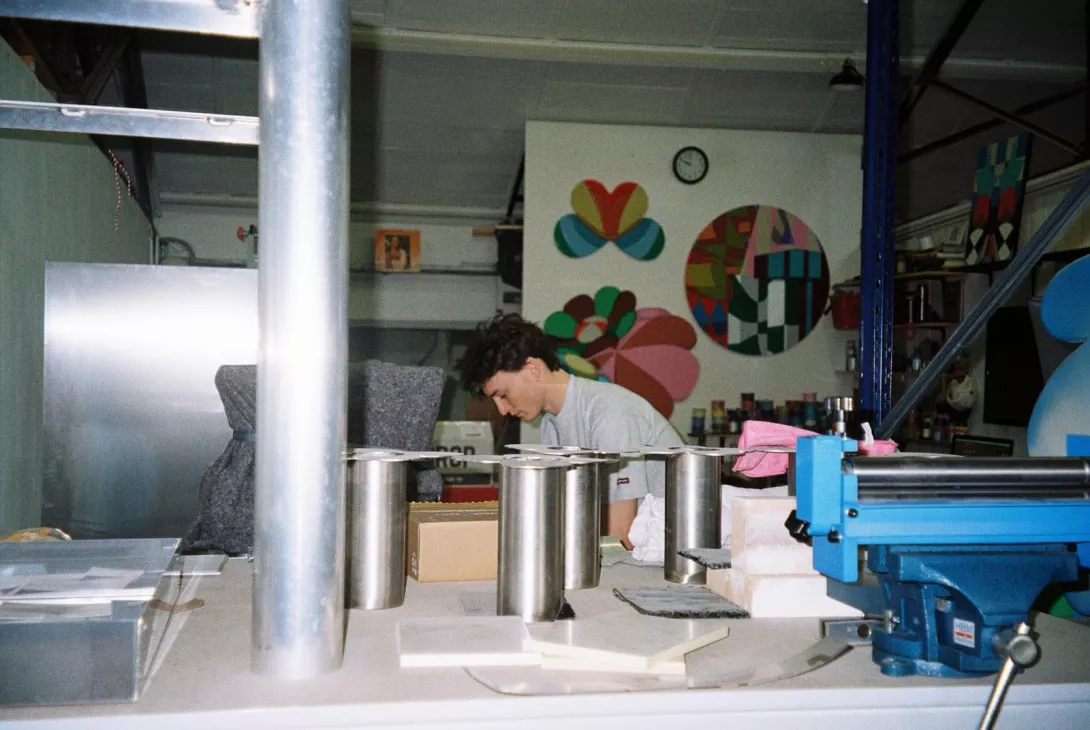
“You bring something into the world that no one really asked for, and that makes it vulnerable.”
Interview with Jord Lindelauf
Jord Lindelauf is a Belgian designer and architect. He reinterprets everyday objects and creates designs that stand out in a subtle way. With his unique design style, Jord makes pieces that do not shout for attention, but effortlessly harmonize with their surroundings. It is this simplicity and honesty that define and distinguish his work.
His work has already been presented at international design platforms such as Collectible Brussels and Paris Design Week. In June, the Brussels-based designer will participate in 3 Days of Design in Copenhagen with Belgium is Design. We spoke with Jord Lindelauf about his career, his sources of inspiration, and his international ambitions.
How did you end up in the design world?
“I find it difficult to define the design world precisely. I exist within a certain spectrum of people I know, friends, but also designers I look up to.”
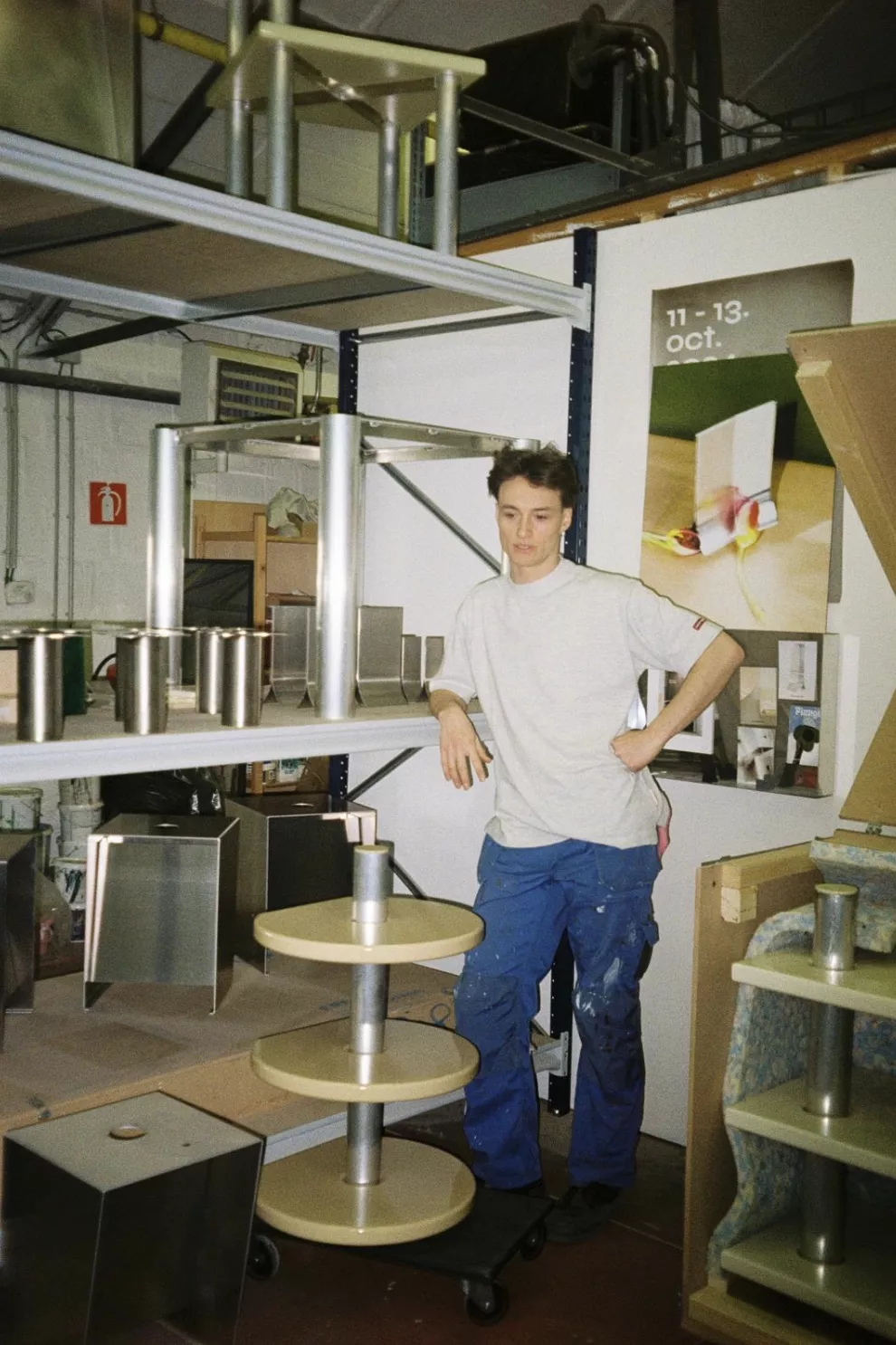
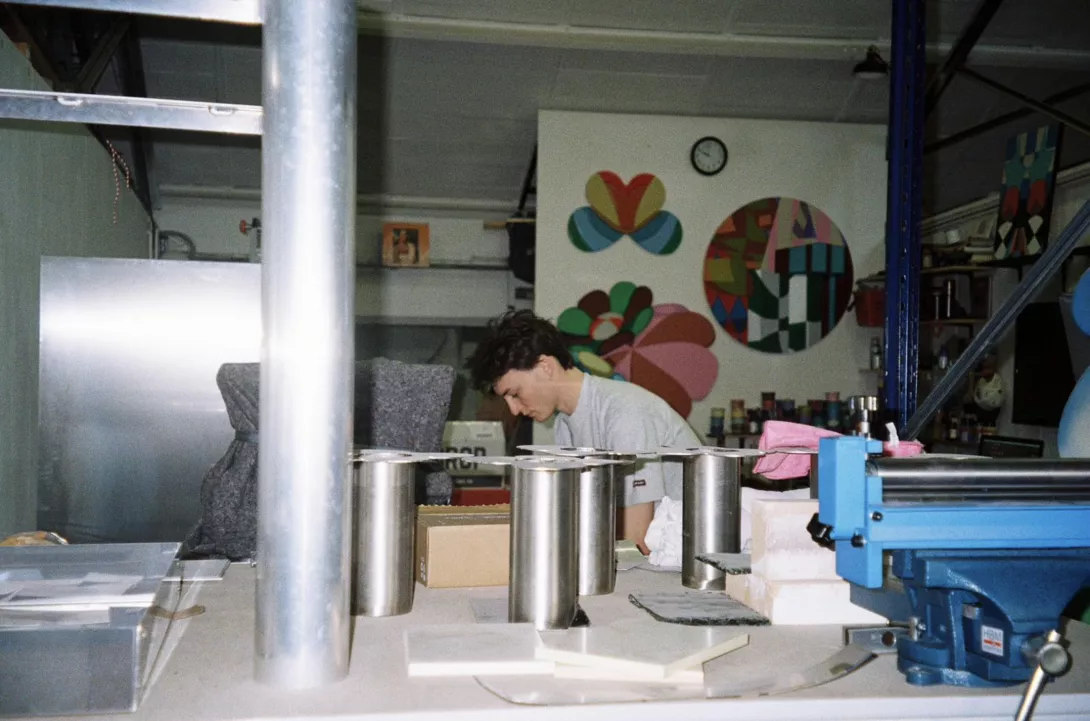
“How I ended up here? It is actually the result of a series of coincidences over the past few years, combined with a strong drive to get somewhere and share my work with the world. I think my interest in furniture design emerged during my architecture studies, where I learned both how to design and how to make. At the same time, I felt a strong need to work with my hands and to create smaller-scale, more personal work. As an architect, you often work for others, on a large scale, within long processes full of consultation, regulations, and fixed budgets. In furniture design and object-making, I found that freedom instead. It gave me the energy I needed to take that step.”
How would you describe your work?
“I would describe my work as simple, reduced to its essence. I look for the most honest way to combine materials and pay a lot of attention to the details where elements come together, how I can connect them precisely.”
What does your design process look like, from idea to final product?
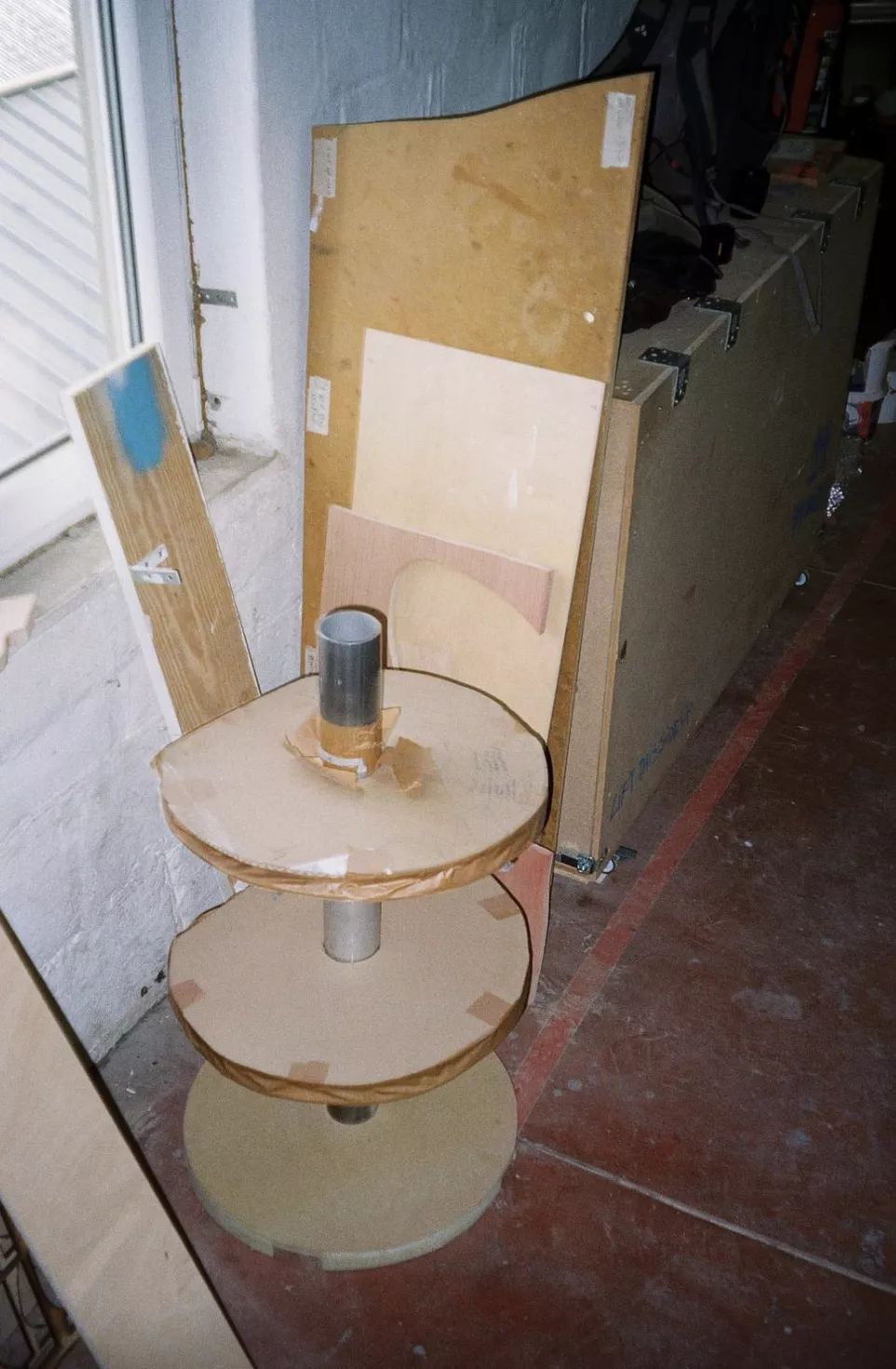
“The process always starts with an idea and a sketch, followed by a prototype, often made in cardboard, but also using waste materials or leftover materials. Something I can cut into, glue, draw on, slice, and colour. Once that exists, I develop it using existing or selected materials. It doesn’t feel fully finished yet, but: steel remains steel, wood remains wood.”
“After that, the search begins for the most effective way to realise the design. If possible, I do it myself. If not, I collaborate with others, mostly within my network of designers. I compare prices, explore different options, and see whether I can still refine the design to improve it.”
“Due to the simplicity of my designs, they are often ‘finished’ quite quickly, but the research then continues in the composition, what elements I use and how I bring them together. There are certain fixed moments (or habits) in the design process, but it is very fluid, with highs and lows.”
Where do you get your inspiration from?
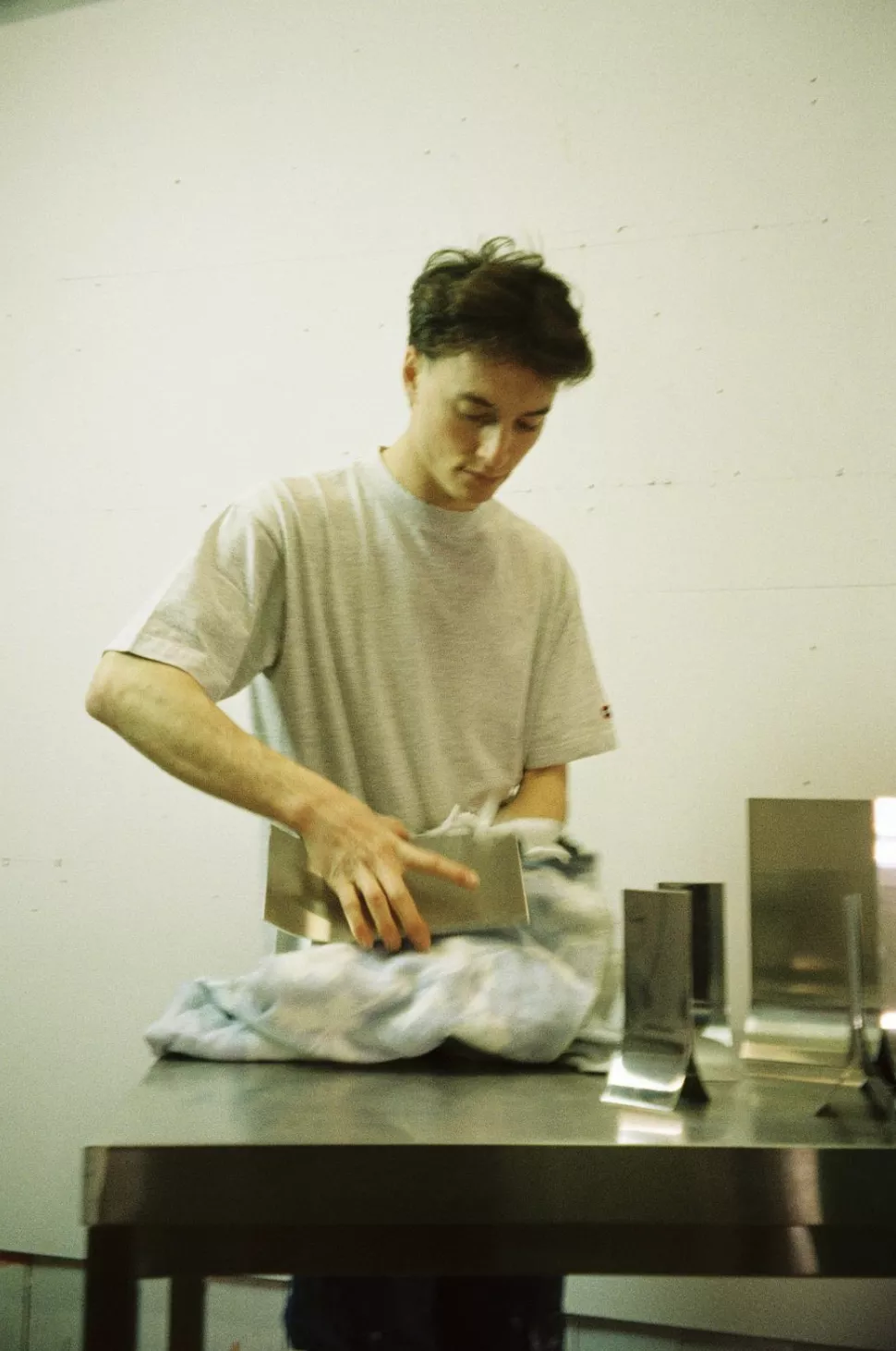
“A bit of everything, really, but especially from everyday life. The 808 collection, for example, is based on childlike drawings: a chair with four legs and a seat, a table with four legs and a round top. From there, the shelving unit also emerged, as a kind of family of three objects, a household.”
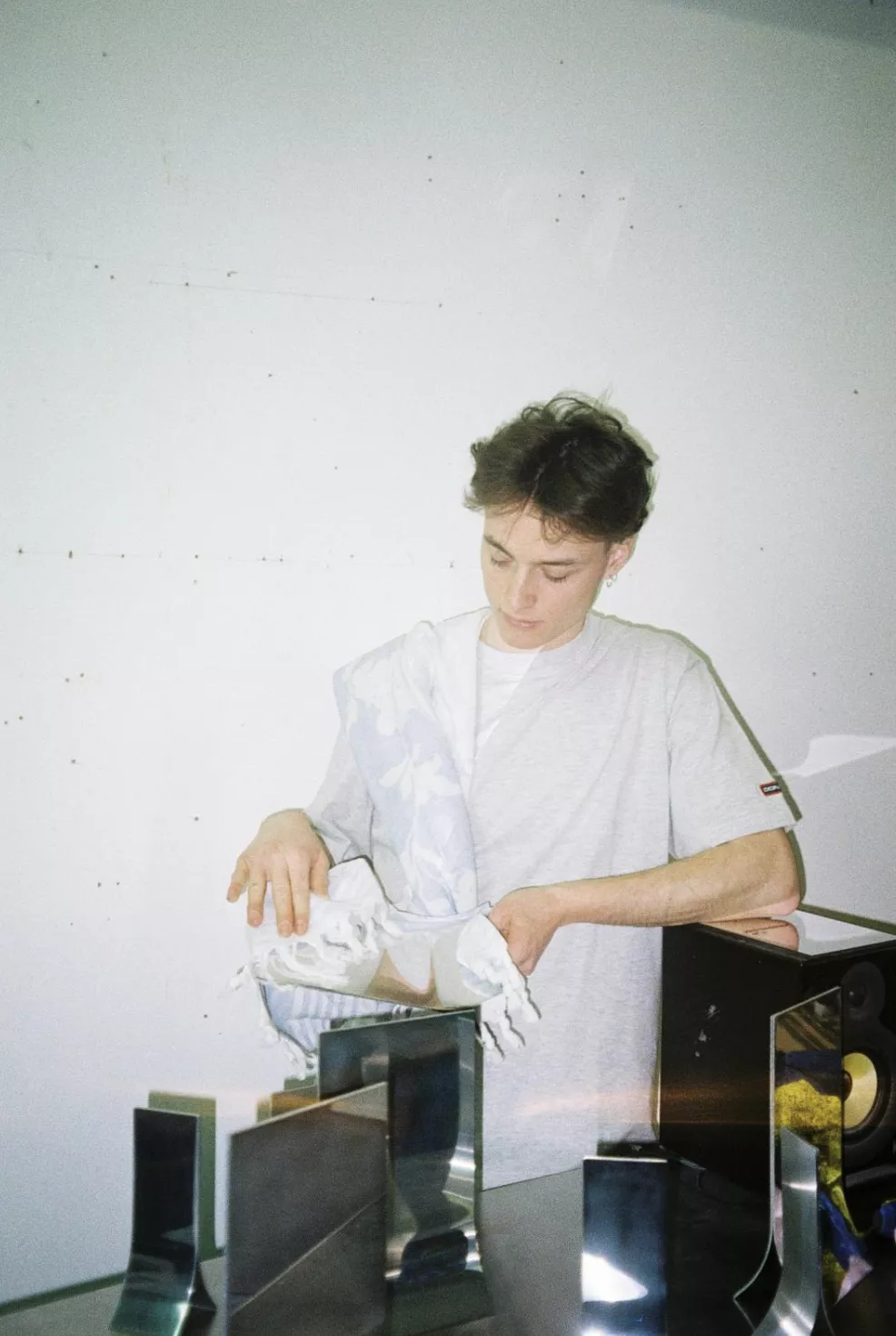
“The mirror originated from the stool, purely from the material. I thought: with aluminium I want to experiment further, maybe I can even make a mirror out of it. A commission for a clothing brand in Brussels brought an important turning point in my work. They first wanted to use the stools in their showroom and then asked whether I also designed mirrors in the same style. That’s how the idea of developing the mirror gained momentum. They actively supported me in the execution and set a concrete deadline. The opening of their shop marked the first moment the mirror was shown.”
“My work has actually grown very organically: from one design came the idea for another, with outside influences such as designer friends, custom orders with adapted dimensions… I like to test things, because who knows what new ideas might come from that. That is exactly what I find interesting: that no one decides what I have to do and that I have complete freedom.”
Do you have a dream client?
“Definitely. I am certainly looking forward to one day having a larger client with a challenging commission. I have already had that experience once at STIJL, the clothing store on Dansaert Street, and that was extremely valuable. It brought a lot of visibility, also because passers-by and shop visitors spontaneously discovered my work.”
“For example, I would like to see my mirror at Arte, in their flagship store in Brussels. It is also a Belgian brand, which I personally like to wear and which has an inspiring story behind it. Years ago, I already reached out to them, when the mirror was still in its design phase. Meanwhile, it is fully finished and on the market, so it would now be a good moment to get back in touch.”
“At the same time, I want to approach this in a considered way. First I want to be sure that everything is right and that the correct parameters are in place. As a designer, I learned that you have to take the first step yourself, because the chance that a client like Arte will come to you on its own is small. Not only does your work have to be strong enough, everything around it must also be professional. If that is the case, and I have the space to do it properly, I definitely want to go for it fully.”
What was your first experience with international design fairs, what were the challenges, and what did you learn from it?
“My first experience with the international design world was during Milan Design Week in 2022. I had graduated in 2021 as a furniture designer with my stool and wanted to bring it to market. Through Instagram I signed up for an exhibition during Milan Design Week. However, when I arrived in Milan, the location turned out to be quite remote, outside the city centre and without much people passing by. That was not what I had expected, and it was also my first time at Milan Design Week.”
“For the object itself it was less of a success, but for me as a designer it was actually a great experience. I stepped out of my comfort zone and approached people every day, started conversations with designers and people I found interesting. Some of those encounters have even turned into friendships. In one sense it was a disappointment, but in another it was extremely valuable. It taught me that you should not stay in a corner when you are somewhere and are curious. Above all, I learned a lot from it.”
Which pieces are you bringing to Copenhagen?
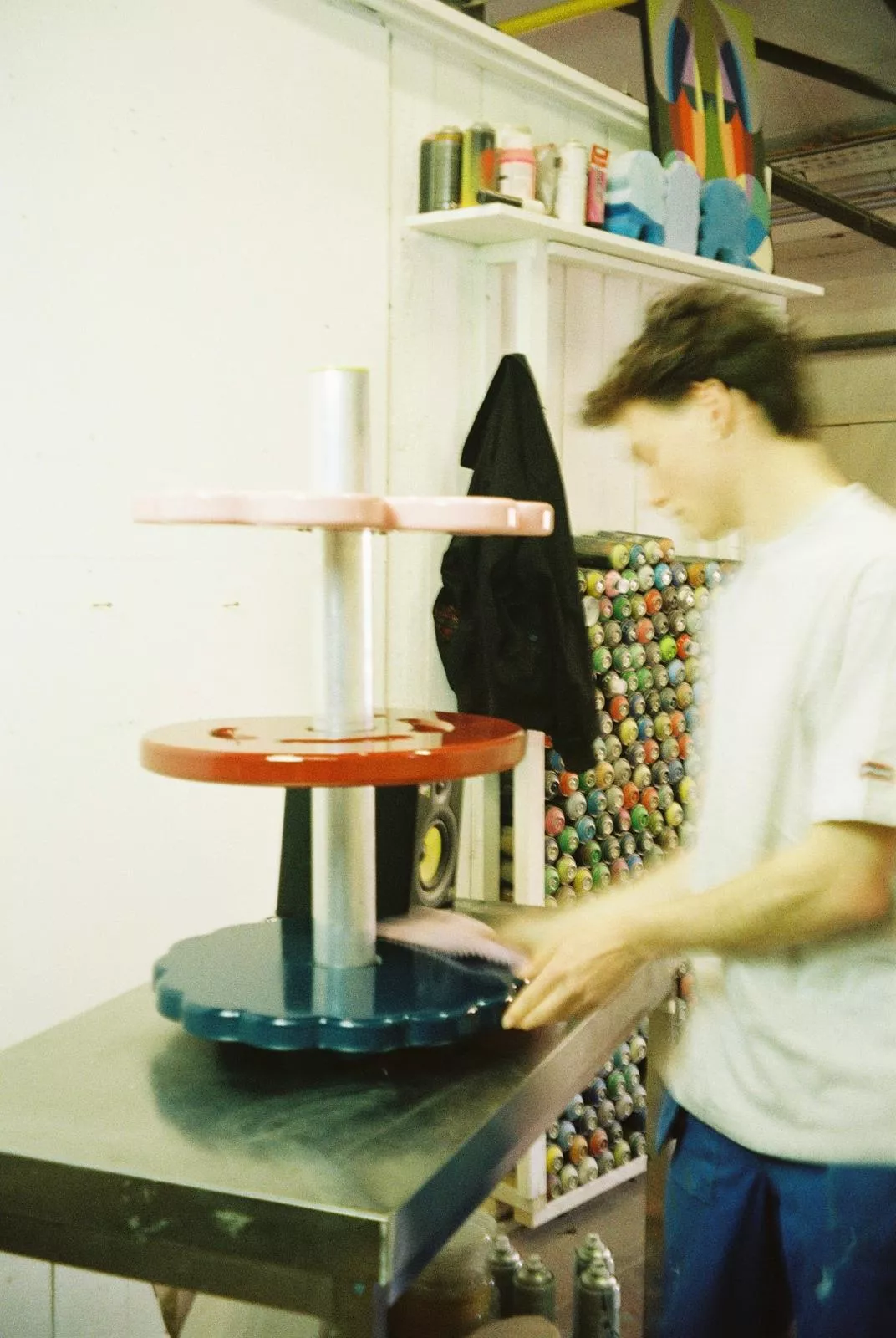
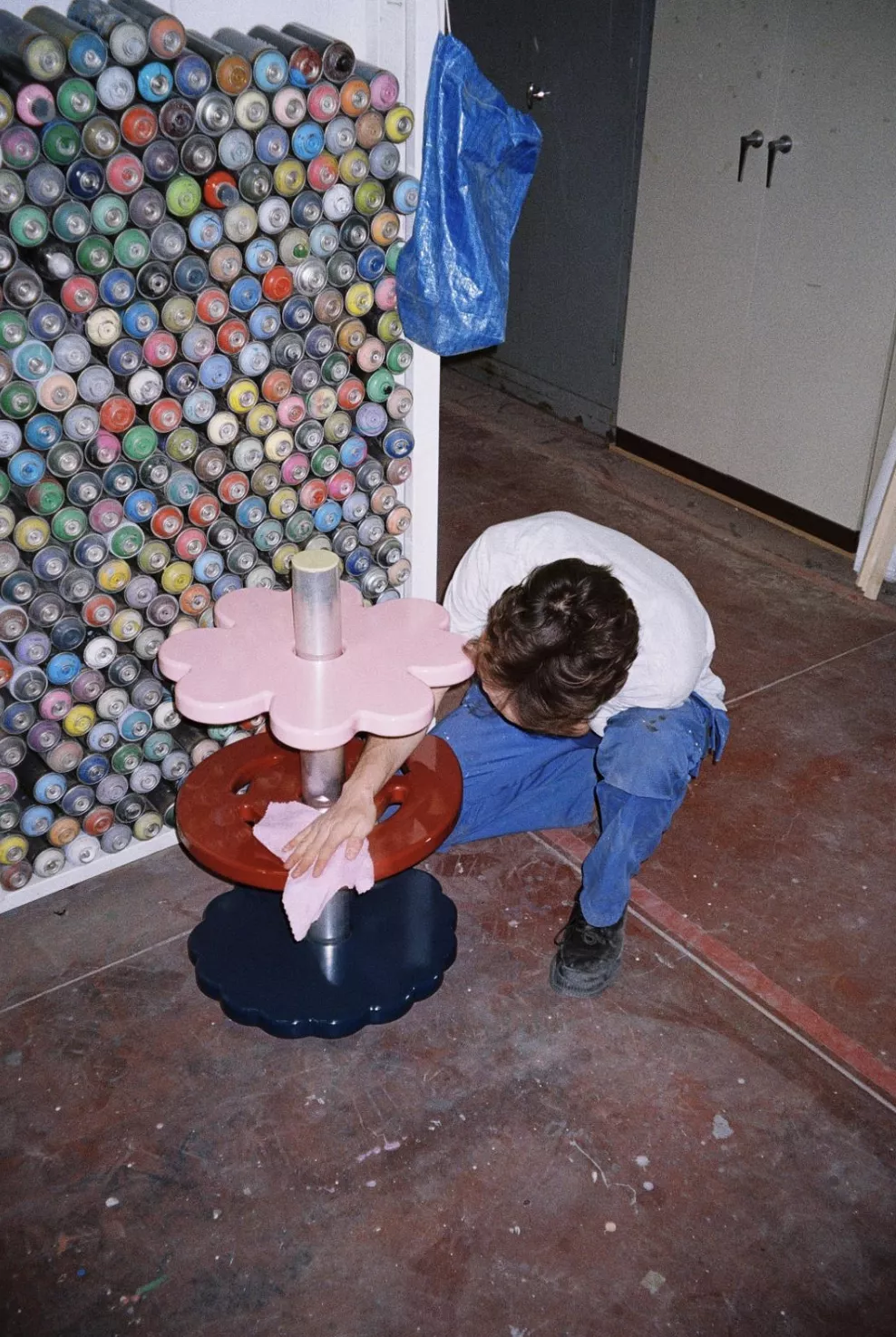
“I will be showing the 808 collection: the chair, the table and the rack, complemented by a new coloured piece I made in collaboration with Lindert Steegen, my studio mate and cousin. The piece brings together our two worlds: Lindert’s colourful forms and my modular system of the 808 collection. The latest addition to the 808 collection, a small console that can also function as a side table, was first presented at Collectible. Together with the three core objects, the console embodies the modularity and playfulness of the 808 collection. I have developed a building system from which an endless number of designs can emerge.”
What do you expect from your participation in 3 Days of Design in Copenhagen?
“My expectations are high and I am really looking forward to it! It will be my first time going to 3DD, but everything happening around it already makes me feel like this is the place to be.”
“I think the objects I will present fit well within 3 Days of Design. The simplicity of the design and honesty of materials in my work are often also reflected in Scandinavian design. I hope for concrete interest from companies that find the 808 collection interesting. I’m looking forward to getting to know the Belgian brands we’re exhibiting with better, some I already know, others I don’t yet.”
“Also, the preparation process I went through together with MAD Brussels was very interesting: the guidance, the input on scenography, and the selection process all added real value. It is also exciting that MAD Brussels, Flanders District of Creativity, and WBDM are not going to Milan this time, but to Copenhagen. It feels like a fresh wind, and I’m happy to be part of this first edition.”
“There is often a certain stress or climax leading up to an exhibition. You become so focused on your design that you lose yourself in it. At the moment you present it to a wider audience, you naturally hope that people find it beautiful, interesting or appealing. It feels a bit like your ‘baby’, you want everyone to like it. But that is also where it can become vulnerable: you are bringing something into the world that, in fact, no one asked for, and that makes it fragile. You cannot always anticipate or meet the expectations of a potential client.”
What advice do you have for emerging designers who want to gain international visibility?
“Just go for it. Be confident in your work and in yourself. Don’t be afraid to ask questions to people you look up to, be bold and take the initiative. Experiment, engage with people who have followed a similar path, and remember: there’s no harm in asking. You can achieve a lot from behind your desk, but not everything. In my view, building a network is the most important thing talk to people and make yourself visible.”