Place du Nouveau Marché aux Grains 10
Nieuwe Graanmarkt 10
1000 Brussels
Nieuwe Graanmarkt 10
1000 Brussels
contact@mad.brussels
+32 2 880 85 62
+32 2 880 85 62
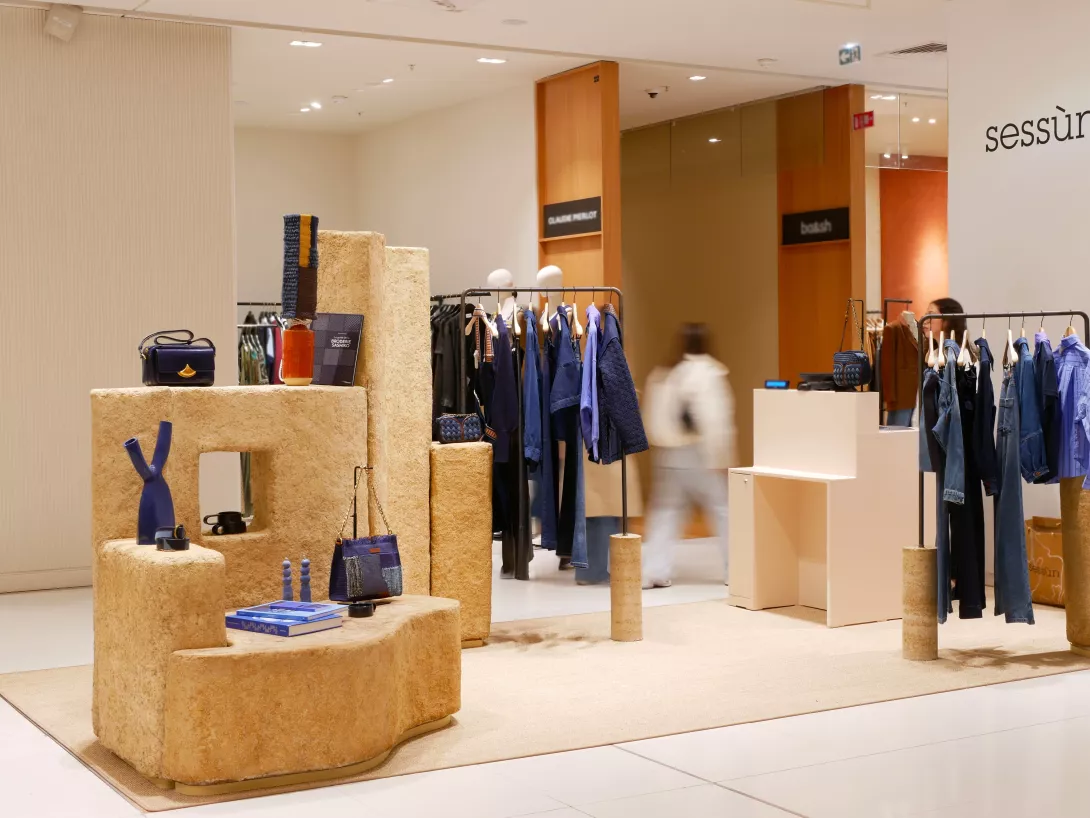
“We want to push the boundaries of materials in design and explore the possibilities they offer.”
Interview with Cru Atelier
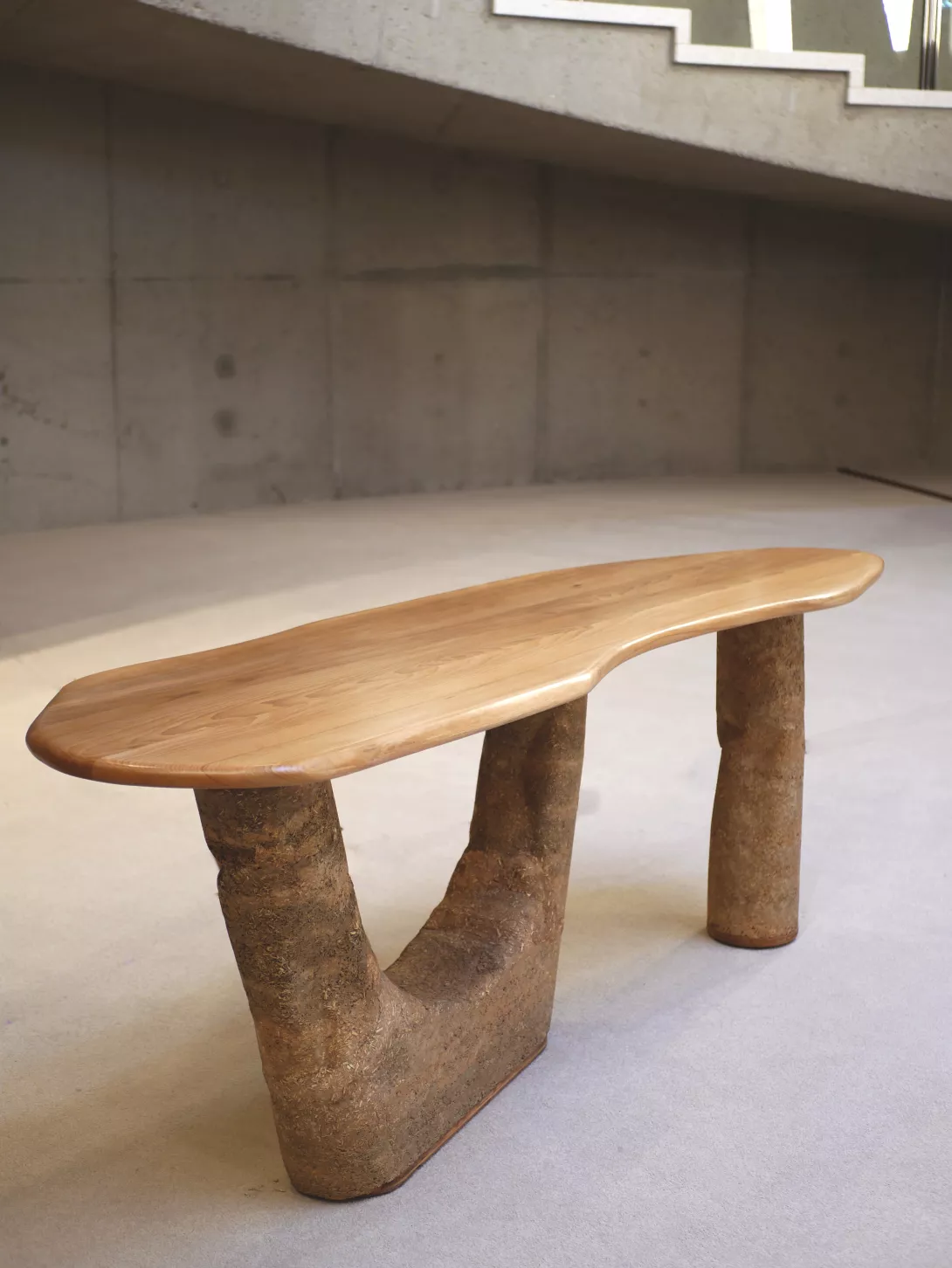
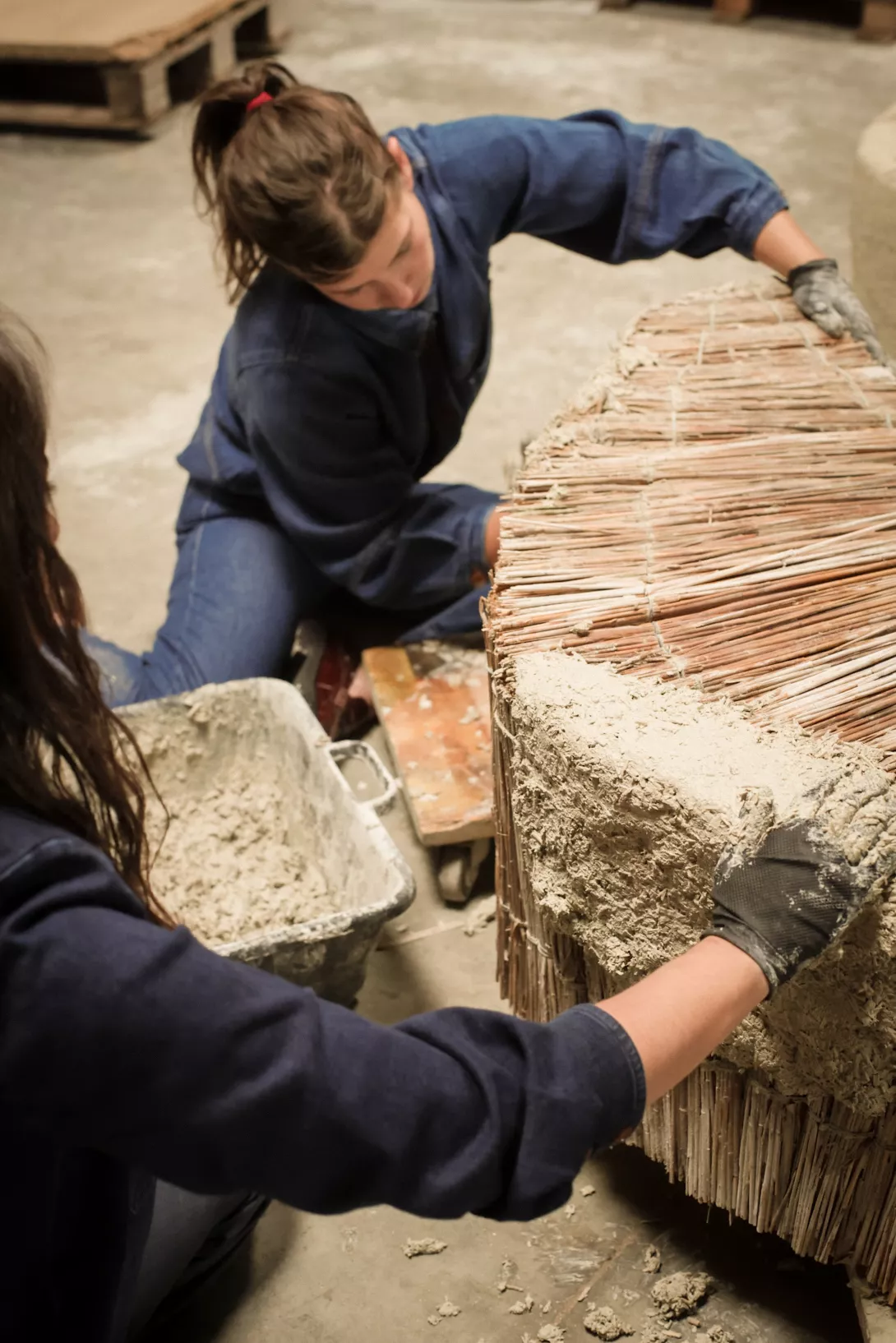
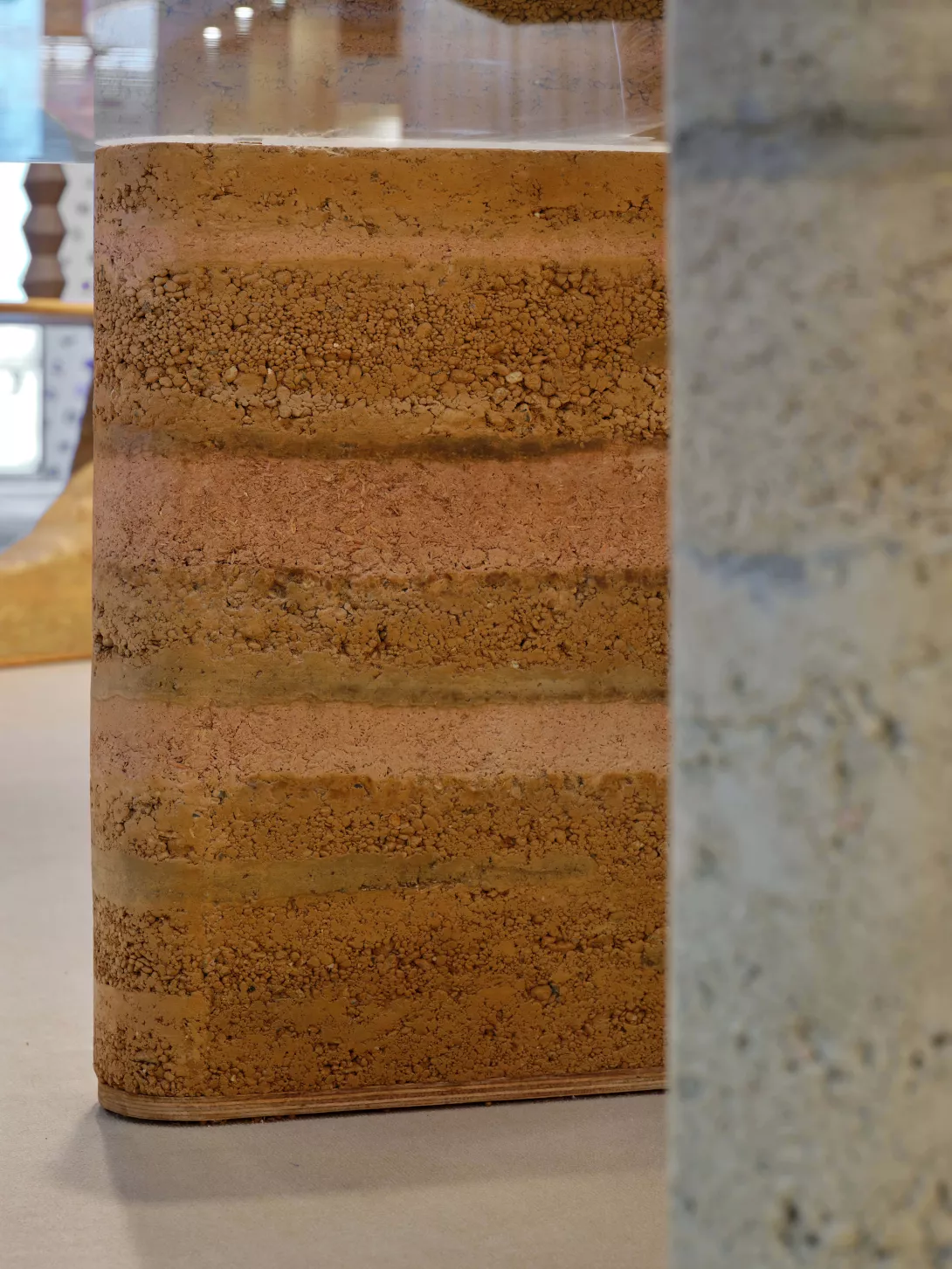
Driven by a passion for organic materials, Cru atelier operates at the intersection of ecological design and craftmanship. Based in Brussels, Sarah El Yousefy and Nina Ouchinsky explore how raw and often overlooked materials can be transformed into functional objects and architectural elements. Their work reflects the duality between tradition and experimentation. Instead of focusing on perfection, they focus on interesting textures and natural materials that lead them to surprising outcomes.
They were part of the MAD Fly 2025 program, MAD Brussels support initiative for growing creative businesses. Through tailored coaching and strategic guidance, the program guides studios as they strengthen their business foundation and help them towards sustainable growth.
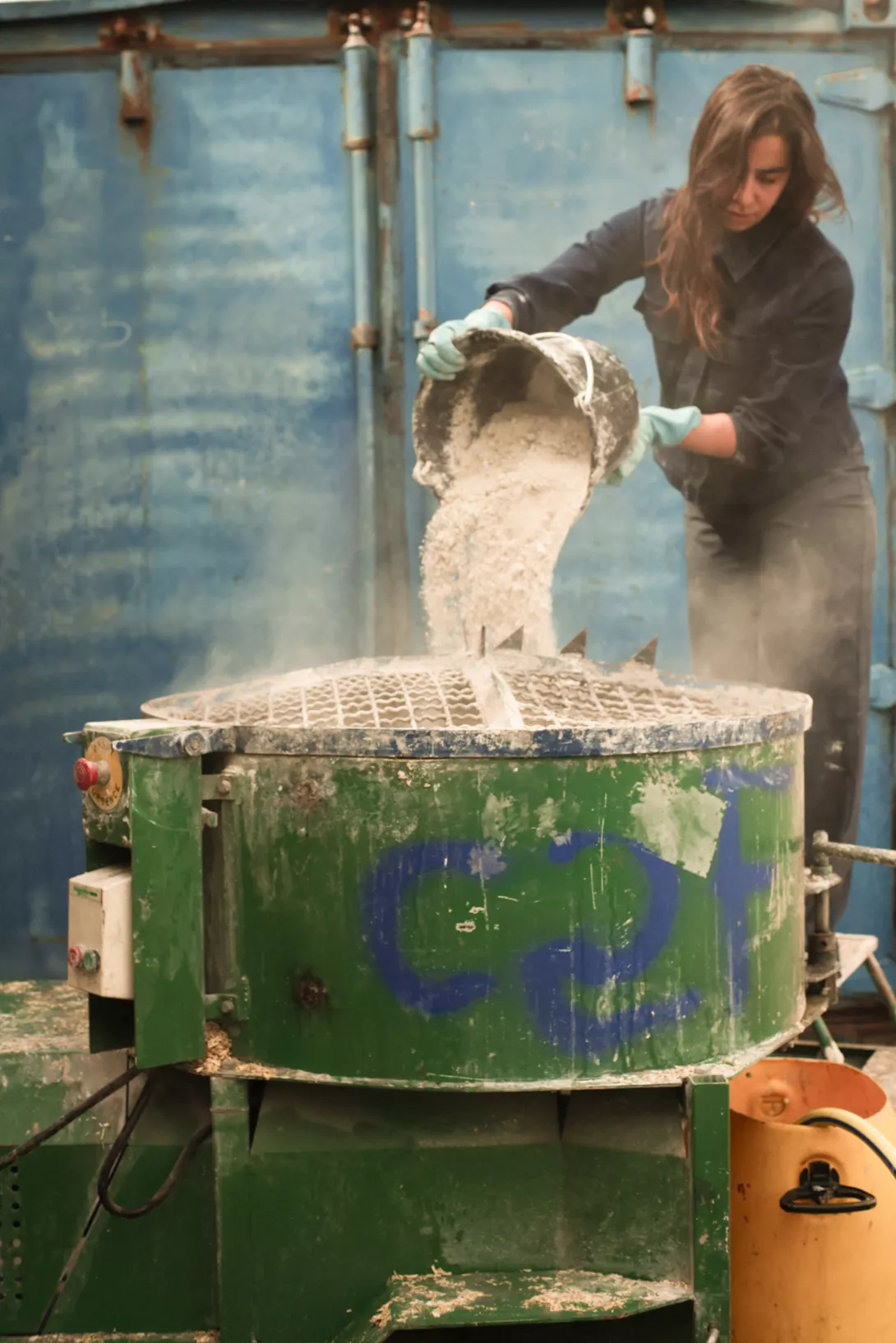
Your work is strongly rooted in organic and natural materials. Where does this fascination come from?
“We both have a background in architecture, where we observed how difficult it can be to challenge traditional construction methods and material choices. Too often, out of convenience or lack of awareness, highly polluting, carbon intensive materials continue to dominate construction sites. That experience led us to question and rethink the standard way of building. We like to work with waste from construction projects and explore organic materials and shapes, because they push us to expand the boundaries of how we build. We believe these materials are the future, but we want to use them in new and innovative ways within the construction and design field. Although more people are working with natural materials today, we want to show a different approach and introduce this to a broader audience.”
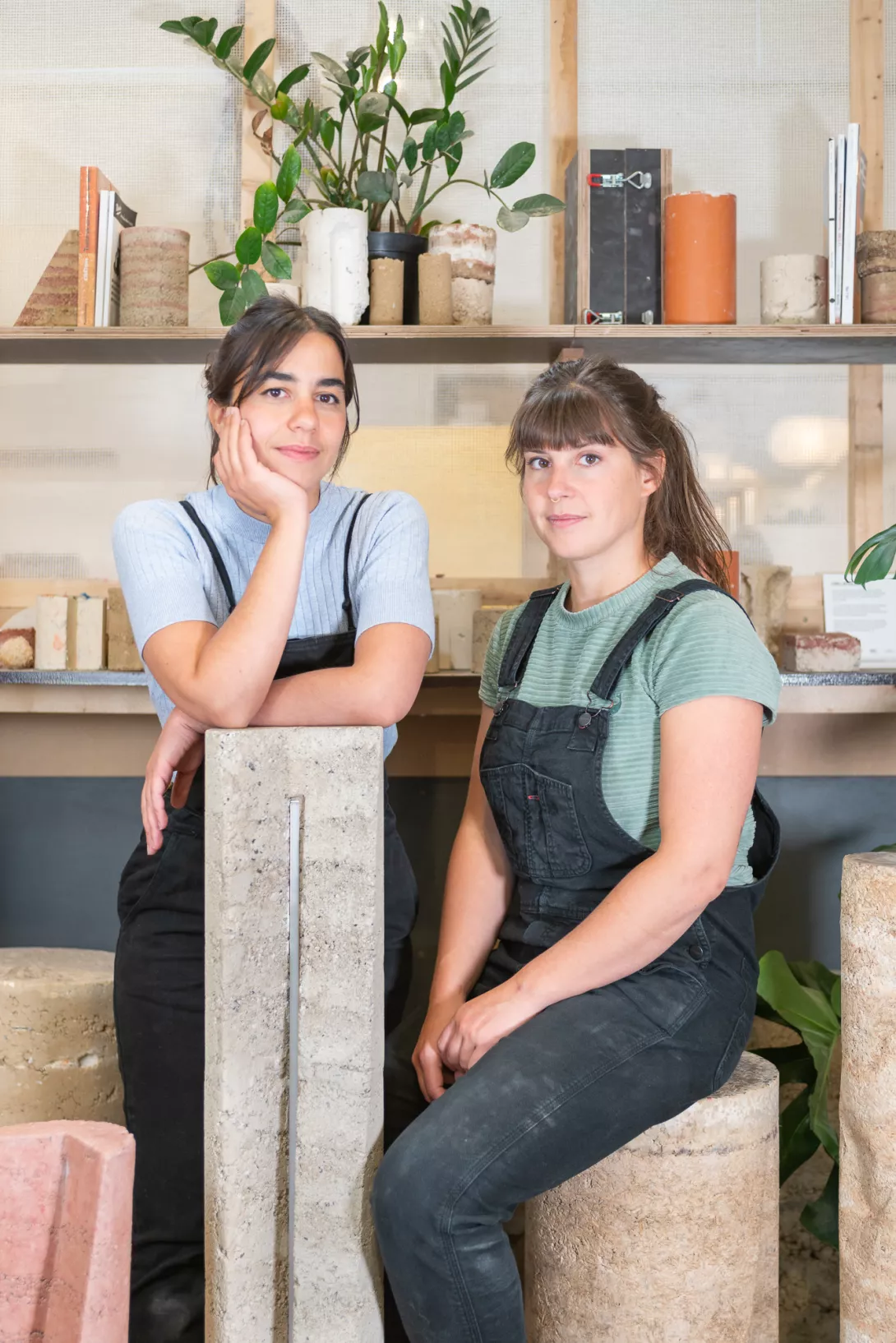
You both graduated as architects; what led you to design instead of a traditional architectural career?
“We have about ten years of experience in the architectural sector, but we recently decided to change career paths to focus more on interior design, scenography and set design. We felt the need to concentrate on smaller-scale work and simply start creating. The process in the architectural world can be very long. Large projects can take up to five years and that became exhausting. Now, we can just start making and sometimes the design even follows afterwards. We begin with the materials, whereas in architecture you usually start with design and technical aspects, and only later consider the materials. We’re happy we made the choice to pursue our atelier. We’ve always been creative since we were young, so it’s nice to be able to express that in our work today.”
How would you describe your experience during MAD Fly?
“We were happy with the coaching, because it focused on different aspects like finance, accounting and branding. We needed to evolve in different areas, so it was nice to find it all in 1 program. When you talk about branding, you also must take the financial side into account. The coaches we met were very inspiring and helped us a lot.”
“When you start a business, you have to ask yourself a lot of questions, but to keep growing you must rethink those questions every year. Questions about identity, what your goals are, and who your target audience is. With MAD Fly you get the opportunity to rethink your answers while being guided by professionals. The year we participated, was a year where we had a lot of projects, so it was important for us to have a solid identity and base to start with. We learned to be more intentional instead of just trying everything.”
What were the main challenges you faced when you decided to join the program?
“The communication and brand identity were major focus points for us. Deep down, we know what we do and why we do it, but that wasn’t clearly reflected on our website and social media. The coaches from the MAD Fly project helped us a lot by confronting us and pointing out what was missing in our communication. They made us realize what truly matters. It’s not just about the amount of images you share, but about the story you want to tell and the message you want to get across. It’s easy to postpone these things and say: ‘We’ll do it later or hire someone for it,’ but then it never actually happens. Since our communication channels are often the first touchpoint with clients, we found the coaching very valuable.”
“We also had some help on the financial part. We already had a business plan, but having an expert review it thoroughly and show us how to use it as a tool was extremely valuable. We often were a bit hesitant to dive into our finances because it felt overwhelming, but the coach at MAD Fly really broke it down and made it easier to understand. She showed us that it doesn’t have to be that complicated and how important it is to keep good track of your finances.”
As designers with a strong research-based practice, how do you balance creativity with entrepreneurship? Do you find it hard to find a balance between the two?
“It’s difficult to find a balance. It really comes down to time management. When we have a lot of production work, it’s hard to focus on the entrepreneurial side of things. At the moment the production is a bit calmer, so we know we should take advantage of that to concentrate more on the business side. But at the same time, we also have to make time for researching materials, so it’s a constant balancing act. Both sides take a lot of time, whether it’s looking for new partners, working on branding, or exploring new materials. It’s important to find a balance between making sure we’re producing enough and giving ourselves enough space to keep the business healthy.”
How would you describe Cru Atelier today and what do you wish to grow into 5 years from now?
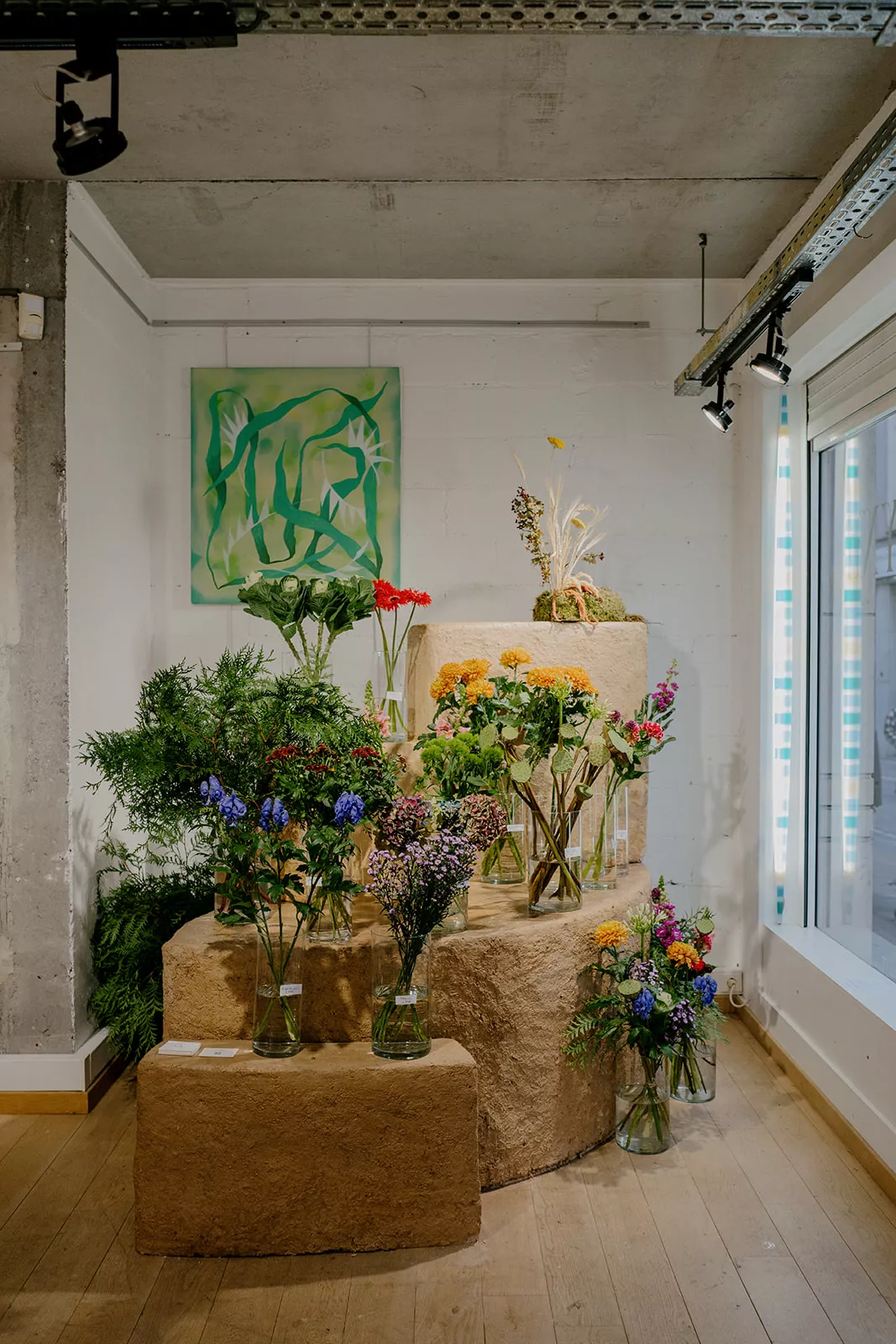
“Right now, our atelier functions as a laboratory for material research and design. We focus on scenography, interior design, furniture, and set design. We want to push the boundaries of materials in design and explore the different fields and possibilities they offer, using each material to its full potential. In the future, we dream of building a small team that we can grow with. Now, it’s usually just the two of us, but occasionally we have one or two interns in the studio, which brings a lot of energy and fresh perspectives. We would like to grow with a team of passionate designers and craft makers. We work towards a healthy balance between dedicated time for material research and the further development of our business.”