Place du Nouveau Marché aux Grains 10
Nieuwe Graanmarkt 10
1000 Brussels
Nieuwe Graanmarkt 10
1000 Brussels
contact@mad.brussels
+32 2 880 85 62
+32 2 880 85 62
"The first function of an object is to influence the people who interact with it."
Interview with Nicolas Zanoni
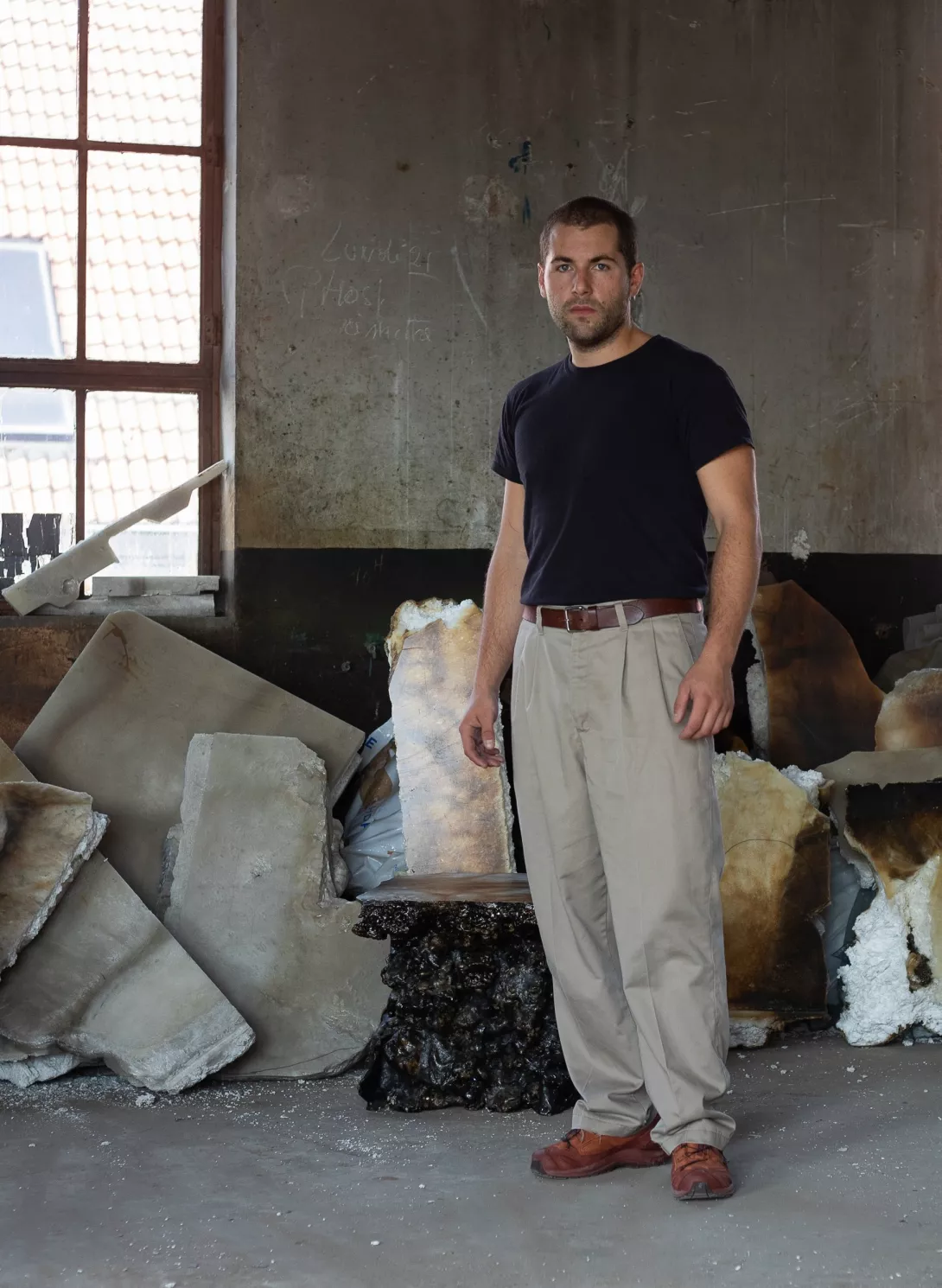
Nicolas Zanoni (1995, Paris, France) is a French designer currently based in Brussels, his work challenges conventional contemporary design. Favoring irregularity, intuition, and hands-on experimentation, he creates functional objects that blur the boundary between design and sculpture. After earning a Master’s in Industrial Design at La Cambre in Belgium, he devoted himself to exploring materials and reinterpreting everyday objects with playful, poetic sensibilities. Working with industrial materials like polystyrene and aluminum, Zanoni pushes their limits through weaving, melting, stacking, burning, and shaping. His instinctive, analogue methods produce organic forms, often shaped by accidents and the materials’ own logic. Zanoni’s signature “trickery”, simple yet transformative manipulations of a single material, and the recurring use of woven or pressed aluminum define his visual and tactile language. Though sculptural in appearance, his objects remain functional, inviting interaction and fostering intimate connections between user and object, transforming everyday encounters into unique, personal experiences.
In this conversation, we spoke with Zanoni about his creative process and contribution to the Home Sweet Home exhibition where his work is currently on view. He reflects on the way his birdhouse came to life, his way of designing and the ideas that continue to shape his practice.
Rather than a fixed method, there is a strong sense of experimentation and intuition in your objects. How did you develop this approach?
"There is always a lot of research that happens beforehand. That is actually one of my favourite parts of the process. It is about finding my own approach and my own way of working with materials. I do not develop completely new materials that do not exist yet, instead I develop new ways of using existing ones."
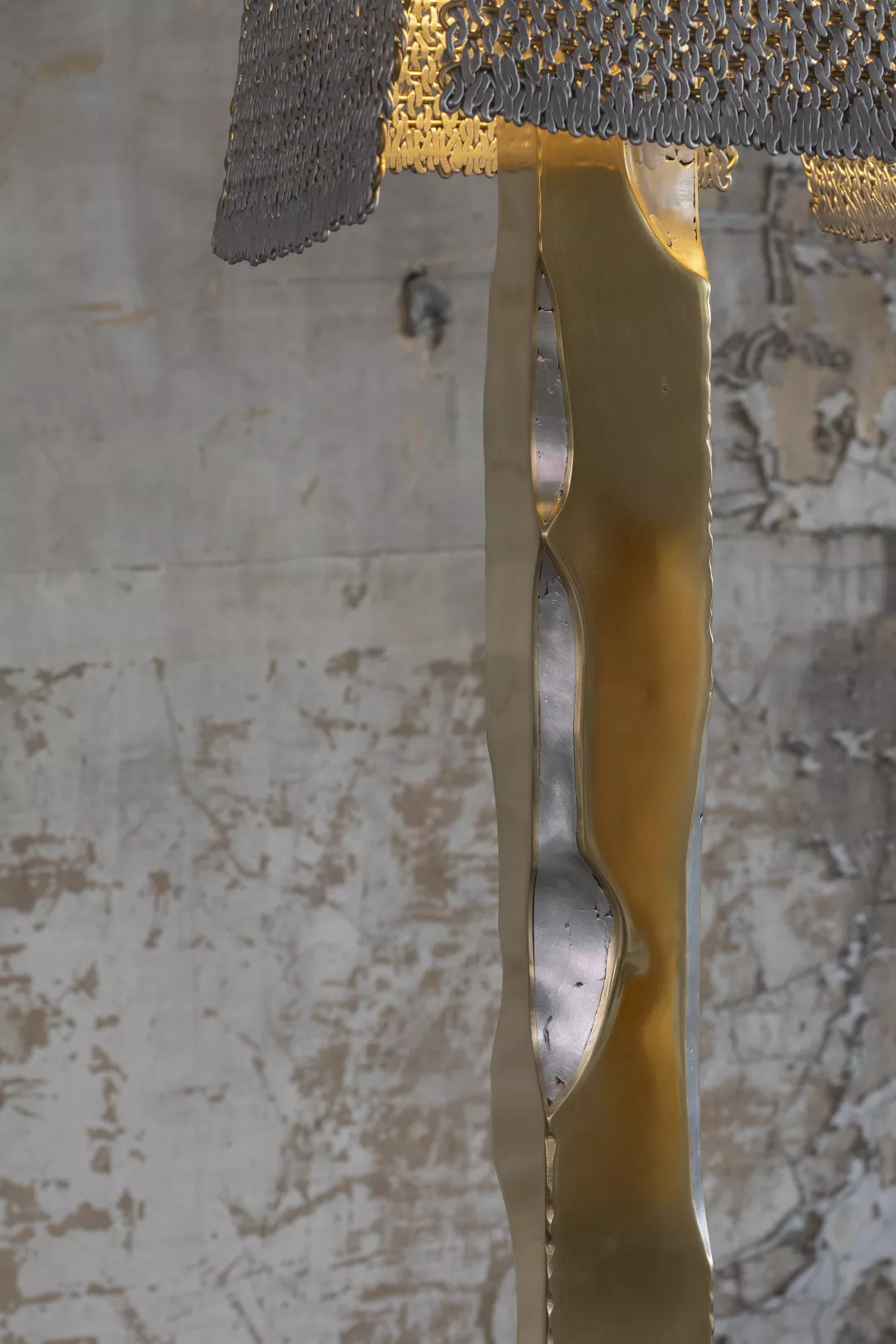
"It is important for me to use materials in unconventional ways, or apply conventional techniques in unexpected contexts. By "unconventional", I mean using materials in ways that are not typically found within my field, such as weaving with aluminium."
"I develop personal approaches and want to understand how materials behave. That is why I experiment a lot. It is a process that I truly enjoy. From there I try to translate these experiments into objects. Design is a language for me that consists of objects and I use it to translate my research."
How do you find the balance between functionality and the abstract qualities you like to explore?
"I find it important that all the objects I make can exist in a domestic environment. I want my objects to be used and lived with and not simply placed on a pedestal. Functionality is of course important, but for me an object’s function goes beyond its practical use. It is also about how it changes an environment. I believe we are influenced by the spaces we live in and in that sense the first function of an object is to influence the people who interact with it."
"I aim to balance the aesthetic and the sculptural aspect of an object with its functionality. That balance is what brings an object to life. It comes from the dialogue between the way you create an object and the way it will eventually be used. For example, I might design a side table, but if you place it around a table, it can easily become a stool. The surroundings often define the object as much as the object itself. Even so, I still respect functional constraints through measurements. For instance, you simply cannot make a shelf that is only two centimetres deep."
When did you start designing objects and was it hard to find your own style?
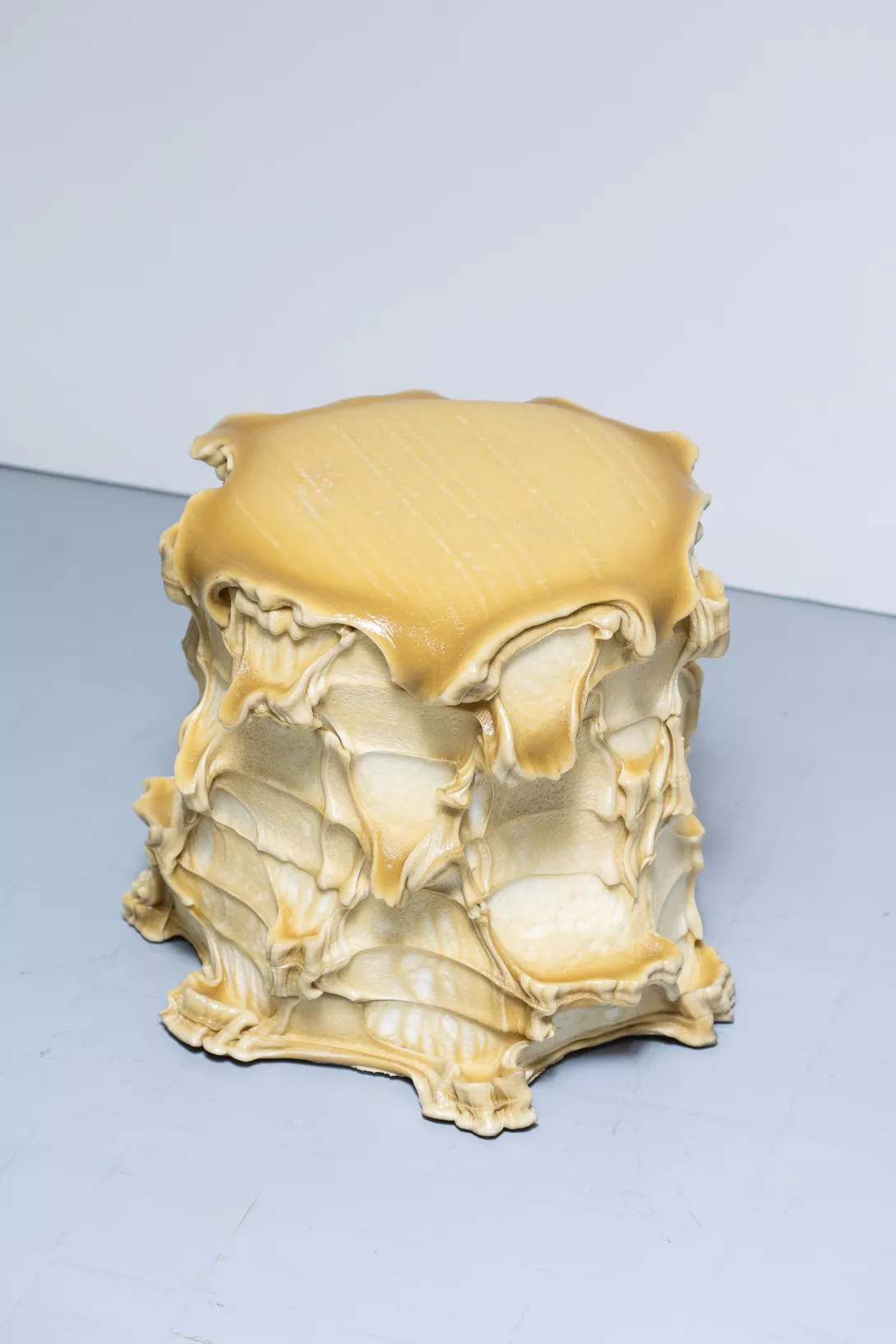
"I don’t have one particular style. For example, the piece I made for Home Sweet Home is laser cut, which meant that the process involved a lot of precise work behind the computer. At the same time, I also make pieces like Pyrofoam, which has a more intensive production process. Because of that, my work can take different directions. I get bored quite easily if something becomes too repetitive, so I like to move from one approach to another."
"One thing that does come back in my work is a sense of tension within the objects. There is also a certain playfulness and a sense of interaction. Everything is built around the idea of bringing the material I am working with to life. I am not trying to define or pursue a specific style. Of course I am influenced by many things that shape my vision, but I do not want to be stuck in one style. I prefer that each project expresses itself in its own way, rather than forcing everything into a recognisable aesthetic. You should not limit yourself to one style just so people can easily recognise your work. I am not trying to please anyone in that sense. The only thing that really matters to me is that my work feels authentic."
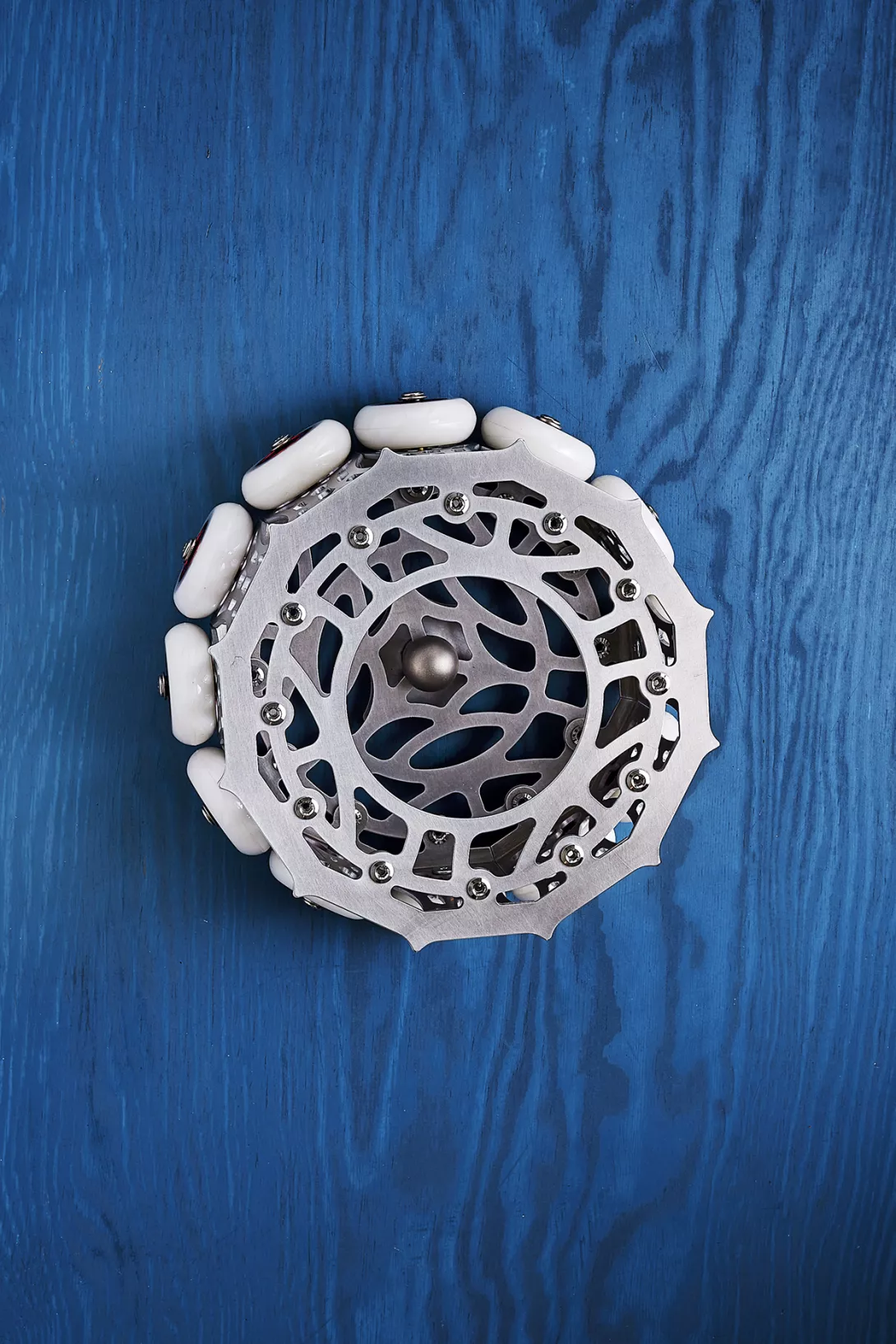
What was your inspiration for the birdhouse?
"This piece is a new part of my collection called Spinner. The Spinner series currently consists of a coffee table, a stool, a vase and now a birdhouse. In a way, I see this project as an exercise in style. All the designers were asked to design the same object, but everyone approached it through their own language and material choices. For me, it was really about exploring and allowing myself to enjoy the process."
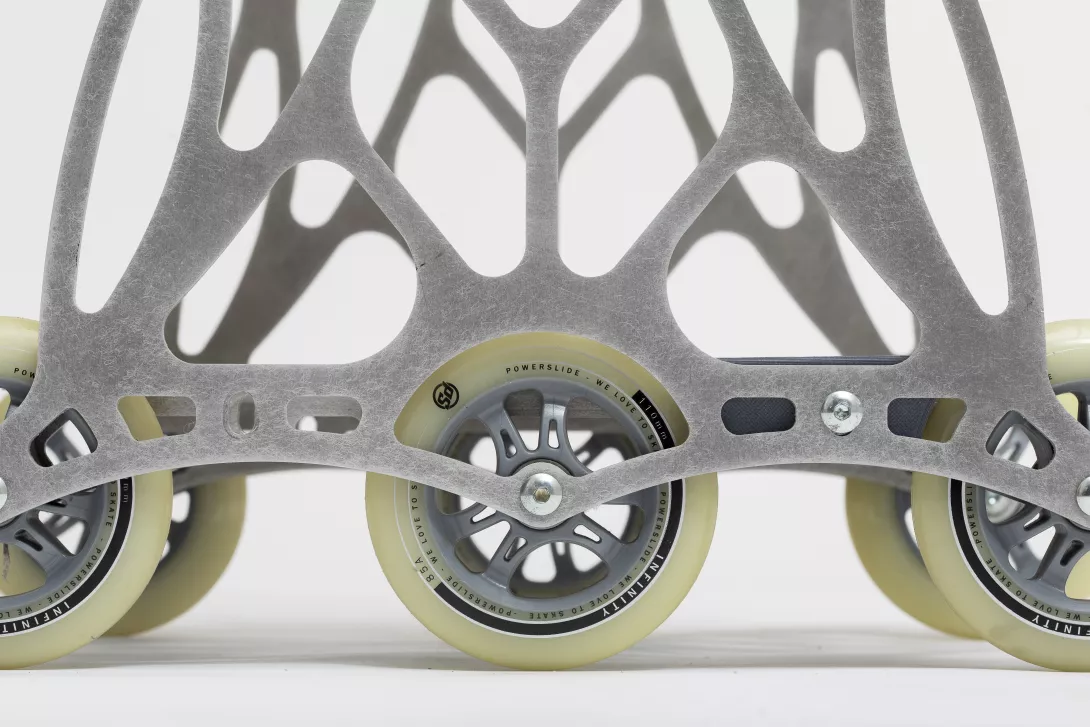
"The entire object is made from laser cut elements with many ornamental offcuts. The inspiration came from optimized topology you often see in objects like rollerblades, wheels and disc brakes. In those objects, material is removed to reduce weight while maintaining strength. For me, these shapes feel like contemporary ornaments. In the past you had Art Nouveau, which used very decorative forms. Here the inspiration also comes from those kinds of shapes and arches."
"Another important element is the wheels, which I wanted to place all around the object. In theory the piece would only need three wheels to spin, but I overcrowded it to create a sense of repetition. The wheels themselves are rollerblade wheels. This project was also an experiment for me, a way to explore an idea that could lead to the next work. I strongly believe that each piece should help generate the next one."
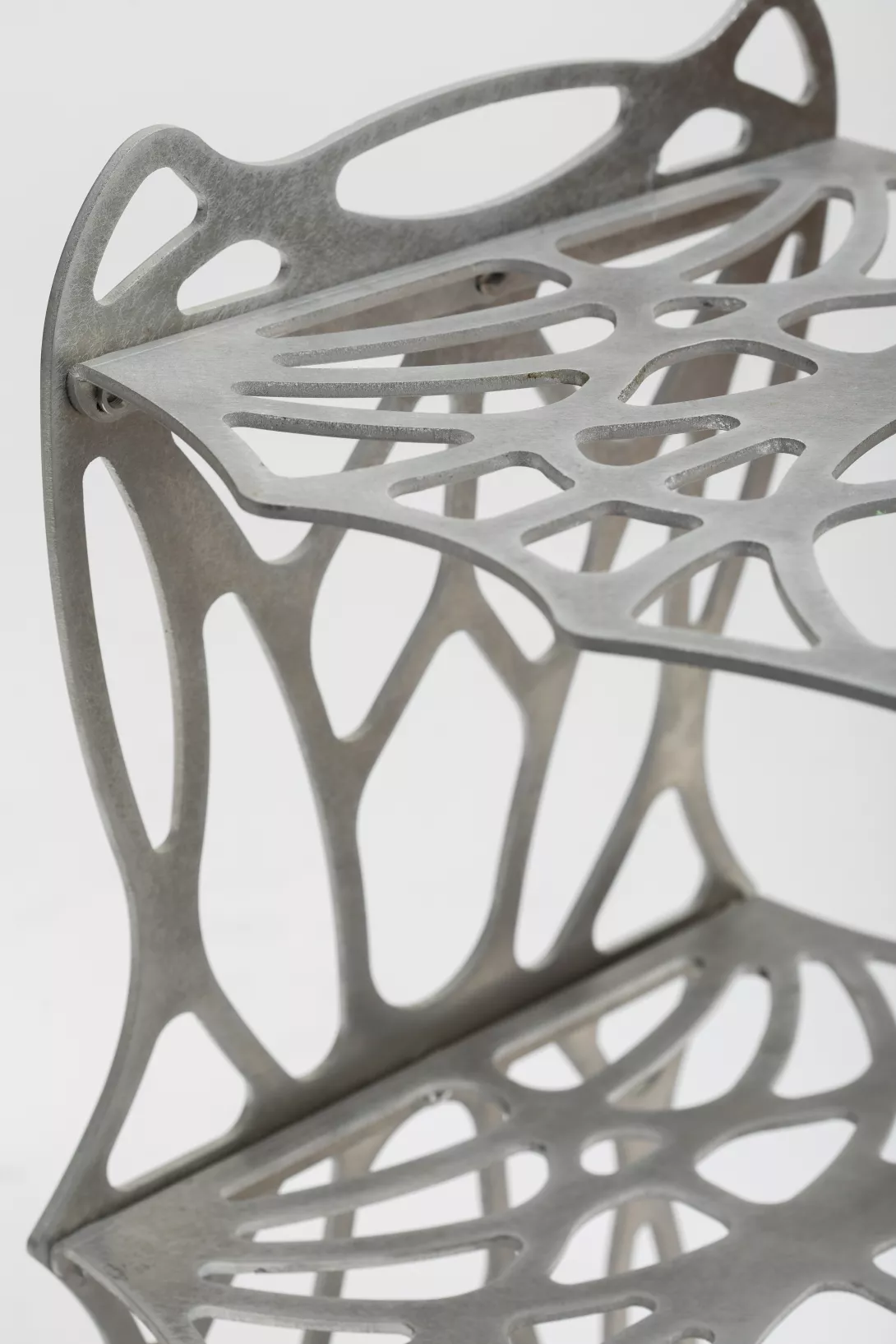
How did you experience designing a birdhouse, considering it’s not a conventional object?
"It all happened very quickly. I had about a month and a half to make the birdhouse. The main idea came to me almost immediately. The size and overall dimensions were clear from the beginning. The only part that really took time was refining the lines and finding the right shapes. It involved quite a bit of computer work, which I sometimes enjoy because it brings a calmer rhythm to the process. It is nice to have that kind of variety."
"I just had to design each element, order all the components and assemble them. It reminded me a bit of when I was a teenager and used to ride my bike a lot. I often bought separate parts and assembled them myself. This birdhouse reminded me of that feeling of building your own bike or toy."
What story does your birdhouse tell?
"It spins and it is made of metal, so I am not even sure if a bird would actually want to go inside. I believe that not every piece I make has to be serious. Home Sweet Home is a big project with well-known designers and I wanted to bring a sense of fun into it. It is the kind of assignment that allows you to be playful."
"A spinning birdhouse could also work as a toy for parrots or other small birds. In a way, it feels more like a toy than a traditional birdhouse, something birds can interact with and enjoy. A home is our playground as humans and we should be able to have fun in it. In the same way, a bird should be able to enjoy a birdhouse."